Are you looking for an easy solar system projects to try? This fizzy planets experiment is quick and easy, with a fun twist that kids will love. In this fizzing planets children will will create each of the planets – which is great for learning planet names, shapes, sizes, and position from the sun. Then kids will create a chemical reaction with a fun experimento del sistema solar that will make their planets fizz, foam and melt. This space experiments for kids is perfect for kids of all ages from toddler, preschool, pre-k, kindergarten, first grade, 2nd grade, 3rd grade, 4th grade, 5th grade, and 6th graders too.

fizzy planets
If your students is learning about our solar system in astronomy, they are going to learn the planet names and the planet order. Most lessons have children make a solar asystem planets project to reinforce that knowledge. This silly and FUN solar system project combines easy solar system projects and a space science experiment. After teachign planets to preschoolers, you will dig in and make solar system model for kids. Once you have made all the Mars, Earth Venus, Mercury, Venus, Jupiter, Saturn, Uranus, Venus, and the sun, it’s time to turn it into a baking soda and vinegar experiment. Children will be delighted by this surprise twist to the project where they will cause the planets to fizz, bubble, and errupt. This baking soda and vinegar reaction will delight students of all ages! Try this planet activities for preschoolers, toddlers, kindergartners, grade 1, grade 2, grade 3, grade 4, grade 5, and grade 6 students.
We have lots more science for kids and solar system activities to choose from! Plus don’t miss our solar system for kids pdf booklet, free solar system coloring pages, free solar system worksheets, and pipe cleaner constellations.

fizzy planets experiment
To try this fun homemade school project solar system model all you need are a few simple materials:
- baking soda (the amount varies by the size of your planets, but you will need several boxes)
- water
- dish soap
- vinegar
- food coloring
- toothpicks and orange pipe cleaner (optional) to make Saturn’s ring
- FREE Printable planet book as a visual aid

fizzing planets
Start out by mixing baking soda, water, and dish soap until you get a consistency that will hold a ball form without being too runny.

experimento del sistema solar
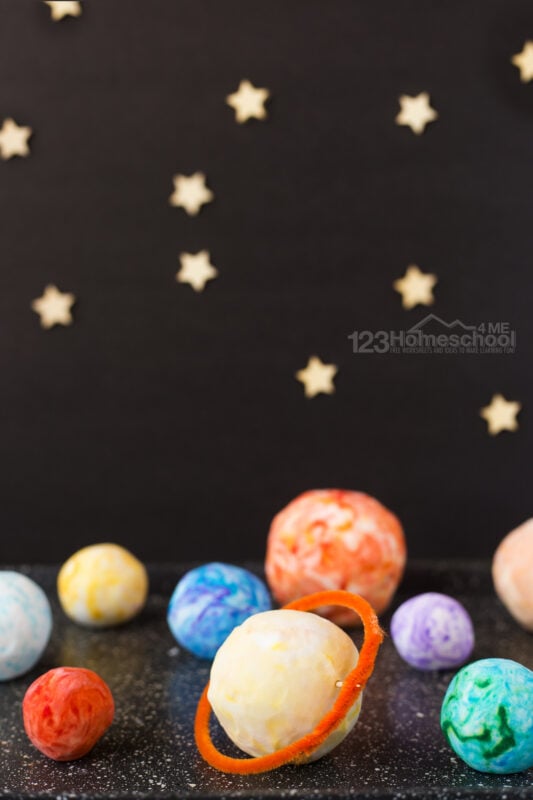
Now form planets on a dish or pan with a lip. You can have the planets in a line or going around the sun in an orbit.
How to scale you get your planets is up to you depending on the age of your child.

space experiments for kids
You can add in the food coloring as you shape them or at the end. We tried to make ours look like the images of the planets from NASA.
NOTE: If you add the food coloring at the end like you are painting the planet it does not saturate the inside of the ball and thus will not make as colorful of a melting planet at the end. On the plus side, it uses less food dye. We tried it both ways.

solar system experiments for kids
The order of the planets in the solar system starting with the sun on the left and working outward is the Mercury, Venus, Earth, Mars, Jupiter, Saturn, Uranus, and Neptune.

space science experiments for kids
Don’t the planets look so pretty all in a line. The colors and sizes came out super cute!
experimentos del sistema solar para niños
We added an orange pipe cleaner that we attached with a toothpick around saturn to make it look a little more authentic.

solar system science experiment
At this point our project looked just like a typical solar system model you would make for a science fair. It is hard to tell that they are made of a base – baking soda. They could just as easily have been made of playdough, paper mache, craft foam, etc.
But now is when the fun begins! Have your child use a pipette, eye dropper, or carefully pour a small amount of vinegar on a planet.

fizzing planets experiment
The key, in my opinion, is to pour just a little bit of vinegar to get the bubbly, foamy reaction SLOWLY.
Remember to have your planets on a surface with a lip so the melted planet doesn’t run everywhere!

Planet learning for kids
solar system experiment

space science experiments
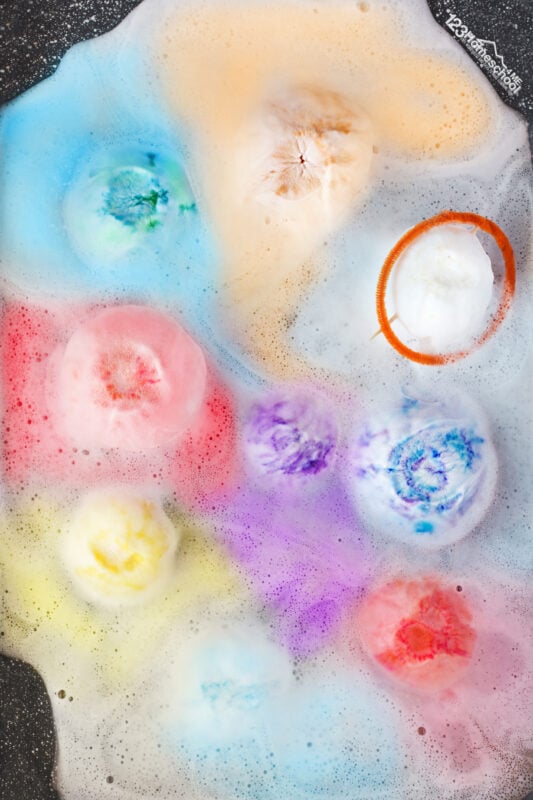
The baking soda and vinegar react causing carbon dioxide gasto push out which is why it looks like it swells. The dish soap we added starts to bubble which is why it looks foamy. As the baking soda changes form the planet will look like it is melting.
experimentos del sistema solar
Continue adding vinegar at the rate you like. After a while the kids had seen the small fizz enough and they were ready for a more dramatic melting of the planets. To really get the vinegar and baking soda reaction going, simply pour more vinegar. We neded up with a beautiful combination of converging colors and melting planets. Continue adding vinegar until the planets have dissolved.

space experiments for primary school
This is such a fun, simple solar system project for kids of all ages to explore both the planets in our solar system, as well as a fun chemical reation with a simple chemisty experiment for kids! Next time I would add big chunky glitter stars around the planets for effect!








Free Solar System Printables
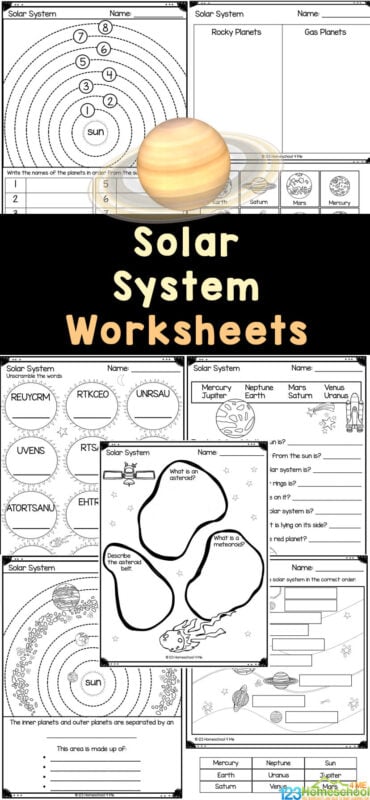
- HUGE pack of FREE Solar System Worksheets for elementary age kids
- Planet worksheets for kindergarten with solar system themed math and literacy activities for preschoolers, kindergartners, and grade 1 students
- Simple Astronaut Coloring Pages
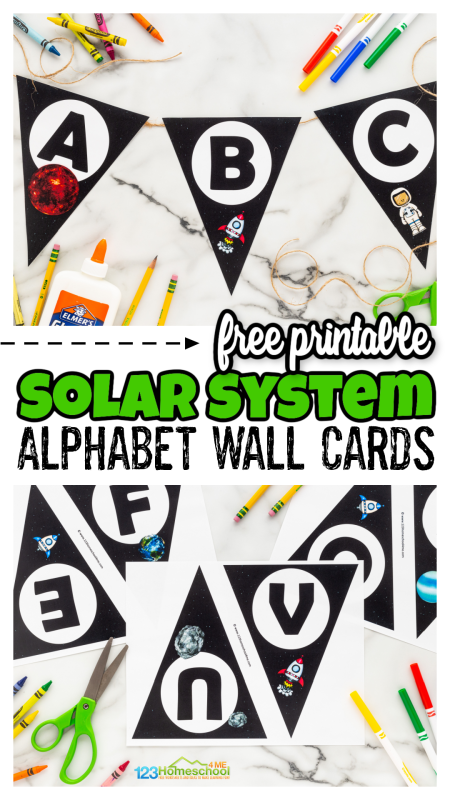
- Free Solar System Alphabet Pennents
- Space Worksheets Preschool
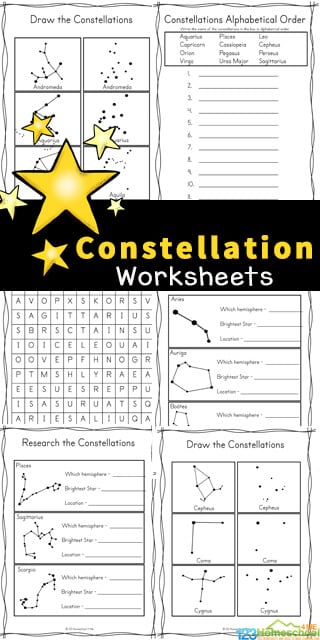
- Free Constellation Worksheets
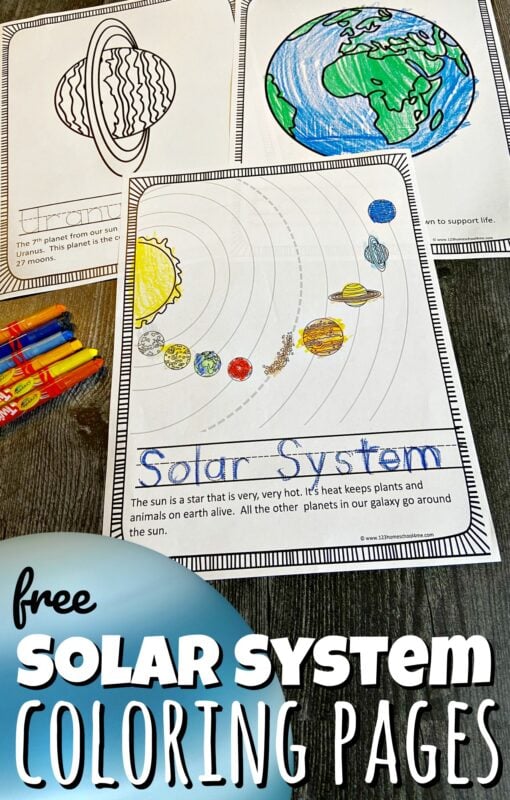
- Solar System Coloring Pages to read, learn, and color the solar system
- Printable Free Constellations Printable pdf for children to learn about stars and the patterns they make in the night sky
- Cootie Catcher Constellation Activities for Kids
- Free Constellation Cards
- Moon Phases Kindergarten Worksheets – HUGE pack!
- Planets Solar System for Kids pdf Book for students to learn about all the planets in our solar system
- Moon Phases Printable Mini Book for kids to learn about the phases of the moon
Solar System Activities for Kids
Looking for more fun, hands on science activities to teach kids about astronomy or to round out your solar system for kids unit. You will love these hands on solar system activities and lessons:
- The Sun Activities for Kindergarten – learn about the sun and how the planets orbit around it including a fun planets game for kids!
- Moon Activities for Kids & Astronauts Too – make oreo moon phases, DIY telescope, learn about the astronauts who landed on the moon, and more!
- Inner Planets for Kids (Mercury, Venus, Earth, Mars) – Use our free planet worksheets and fun hands-on activities like Mercury craters, Venus’ melting rocks, layers of the earth, and Erupting Mars Volcano
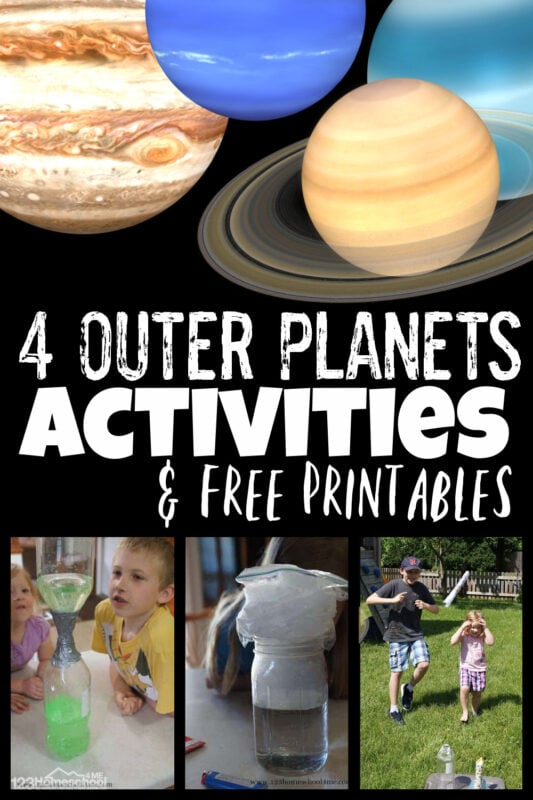
- Outer Planets for Kids (Jupiter, Saturn, Uranus, Neptune) – combination of hands-on solar system projects and solar system printables; gaseous Jupiter, Saturn Rocket, plus cloudy Uranus and Neptune.
- Pluto, Asteroid Belt, Comets, and Stars for Kids – make a FUN constellation projector, cold Pluto ice cream project, and grape constellation project
- Yarn Solar System Project – fun, unique, and easy solar system model that is cheap and so pretty!
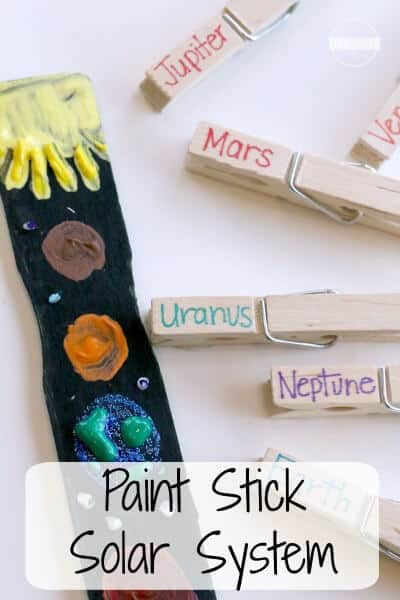
- Paint Stick Solar System Project – easy-to-make solar system model for kids that doubles as an activity for learning the names and order of the planets
- Pipe Cleaner Constellations – fun hands on pipe cleaner constellations activity for kids
- Simple Galaxy Science Experiments
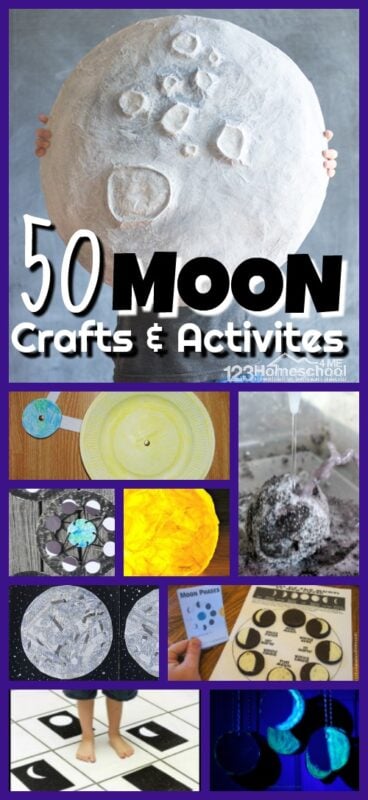
- Looking for more fun, engaging, creative, and memorable moon projects for kids? You will love this 50 Moon Activities for Kids & Crafts collection with the best ideas from the whole internet!
- TONS of really cool Solar System Project Ideas for kids of all ages



Thank you for all your resources.
For the Fizzy Planets activity, do you have measurements. I could not see any listed…so how much Baking soda, water and dish detergent are best to start with to make your planets.
THANK YOU!
Julia AKA Nonna to three grandkids
The activity is so forgiving, no exact measurements needed! I promise =) Make them as big or small as you want. Just a squirt of dish soap and as much water as you need to make your baking soda stick together.